CATALOGUE ESSAY by ELLI WALSH, 2025
Renowned for his deeply felt figurative paintings, Sydney artist Michael Simms engages with molten states of identity, masculinity and the body. Articulated with lively strokes of oil, his painted figures speak of perpendicular states, of the fluidity and fixity of self and our modulating relationship to our own corporeality. The body, for Simms, has always been in dialogue with something external – intertwined with digital technology, in isolation during pandemic, or moving through the expansive Australian landscape. Recently, however, the artist has turned inward to consider the body in alliance with the self, aiming to bring historical narratives into conversation with contemporary discourse.
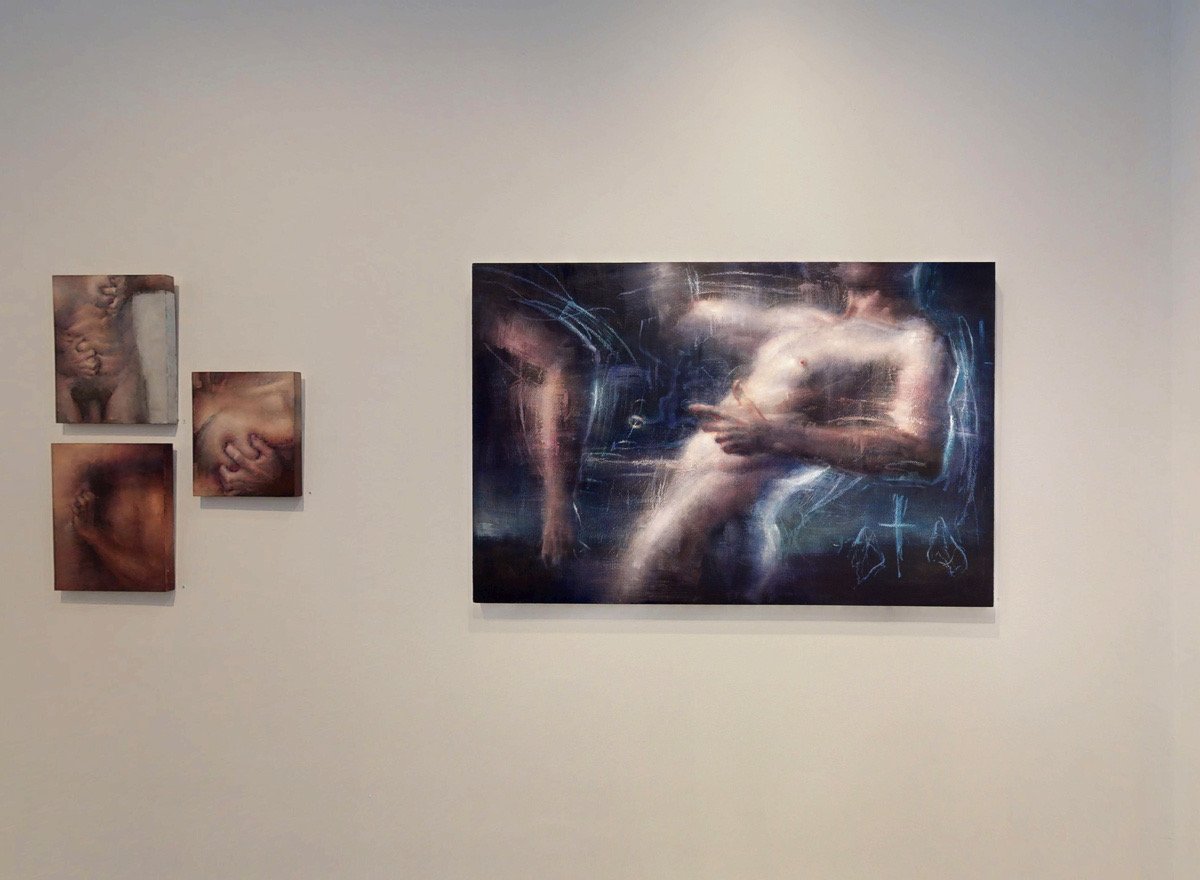
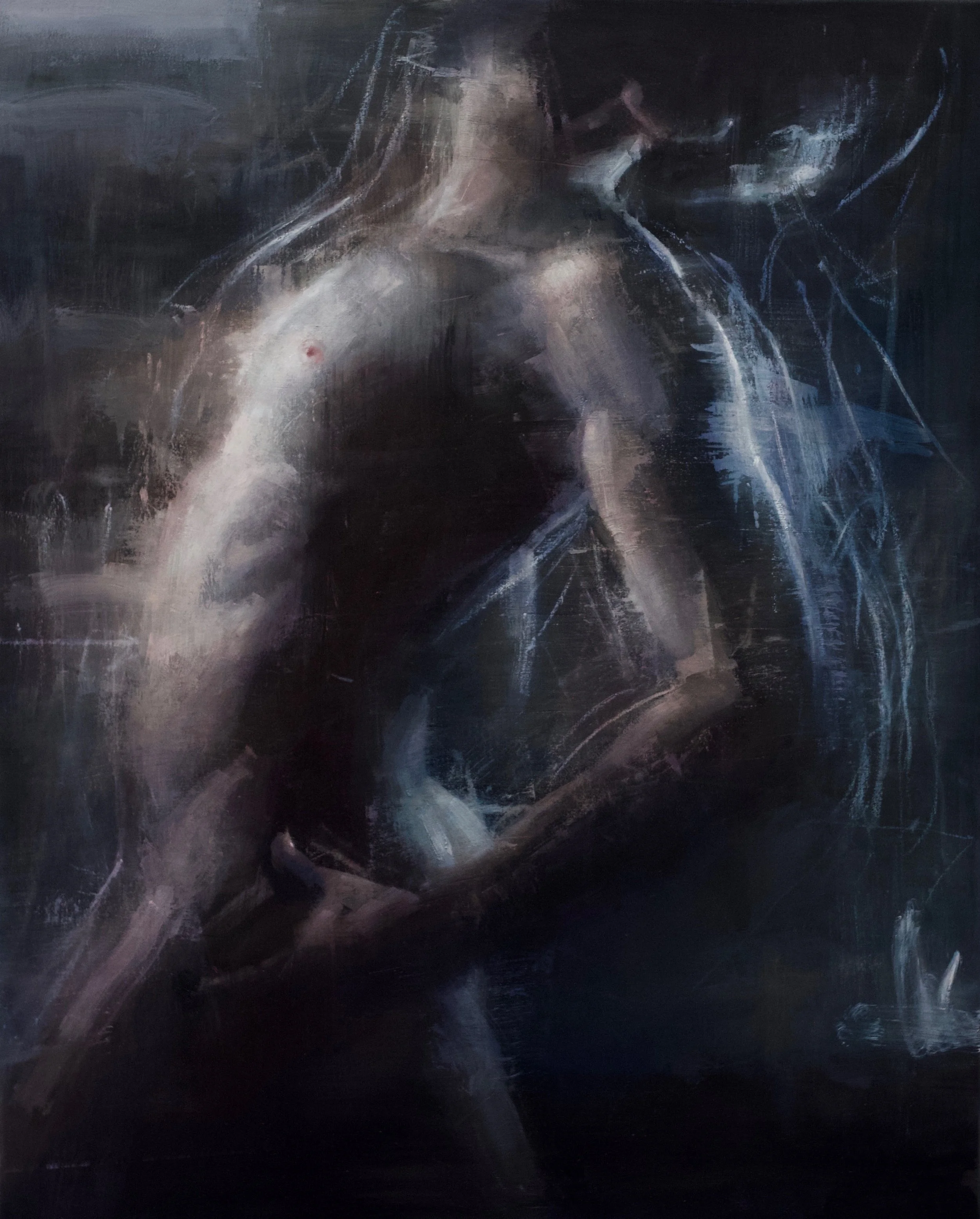
Portraiture plays a foundational role in Simms’ practice, portraying artists who create live experiences, in an ongoing project called ‘Stages’. Increasingly, he’s personally venturing further into the realm of performance, blending and bending genres to create a new kind of body-based poetics. Simms’ new series, ‘Body Talk’, orbits the dynamics of embodied intelligence via deep considerations of performance, movement, and the body in space – and history. It builds on recent explorations of performance practices during residencies at Bundanon and Gang Gang and workshops at Critical Path where the artist engaged with choreographers and movement practitioners. “This changed the way I paint’”, he reflects, “generating images from a more physical and internal place”. Created through an experimental approach of automatism, the works investigate the kinaesthetic potential of the body and how this can shift, shatter and shape the image-making process. An increased awareness of how we move through space has enabled Simms to discover unexpected anatomical shapes and unconventional gestures that challenge historical narratives and traditional tropes of masculinity. “I'm curious about how the male body is so often depicted as being strong, heroic, dominant, fighting, in conflict...and what this unconsciously re-enforces about gender roles, the patriarchy and masculinity,” he explains.
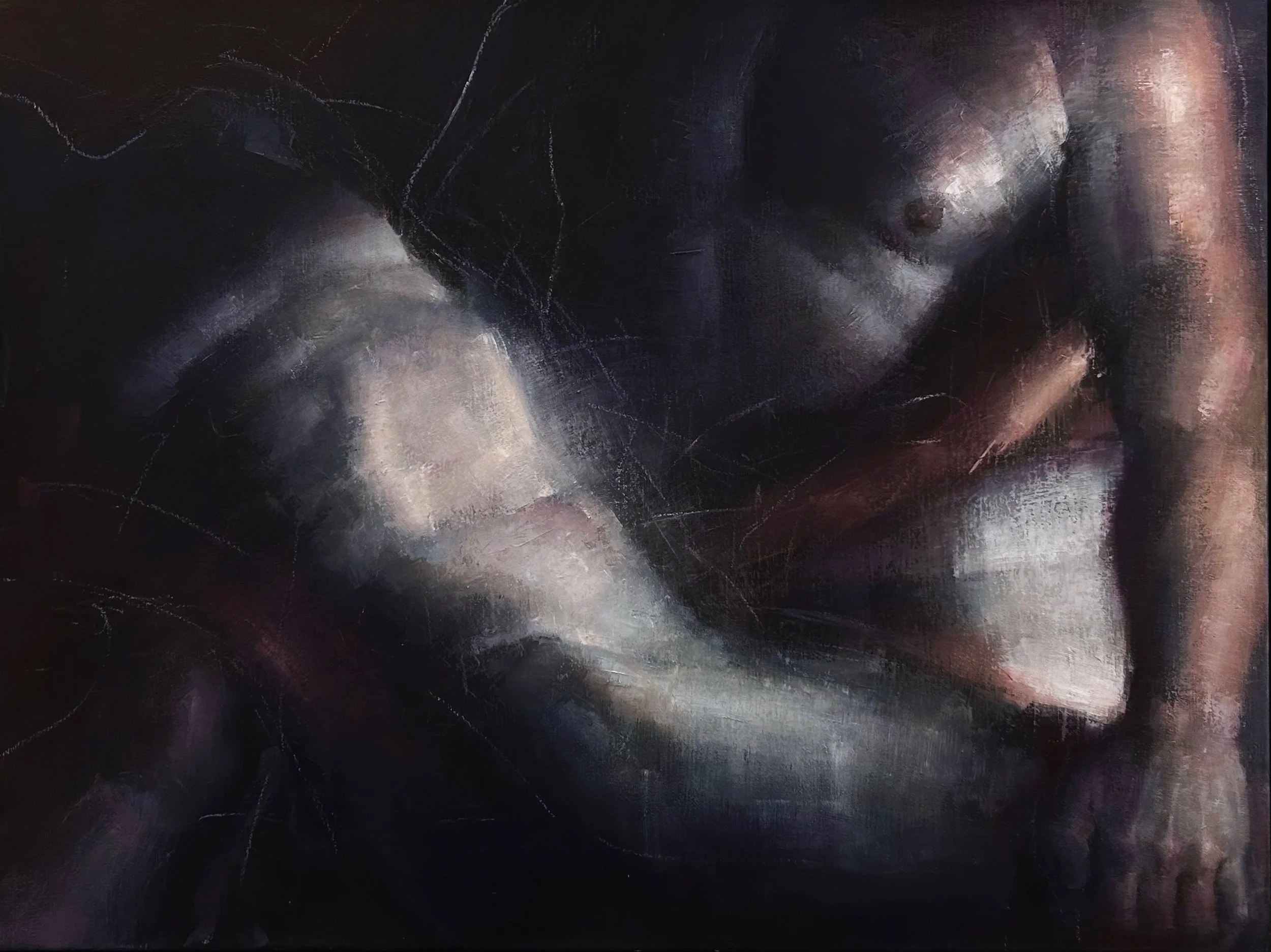
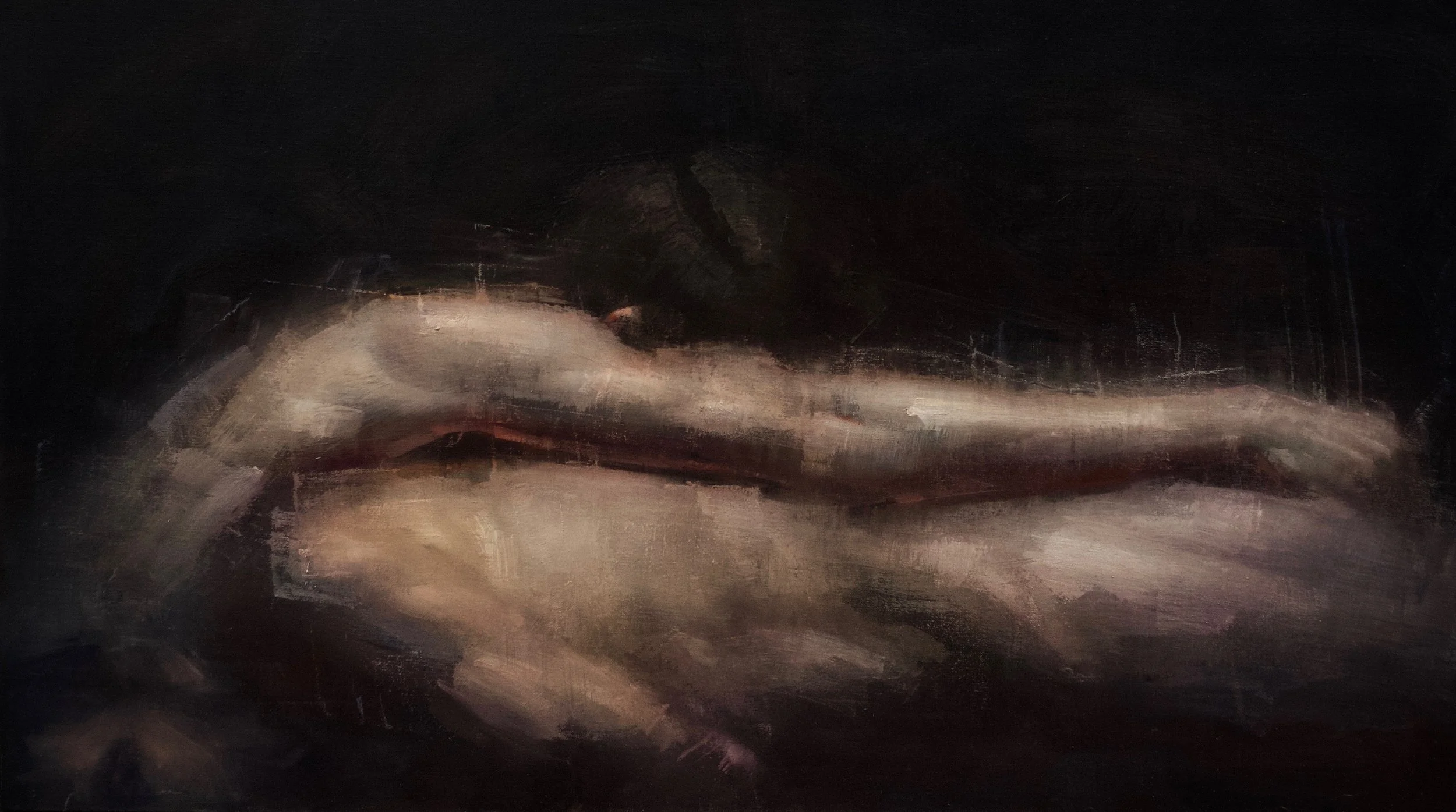
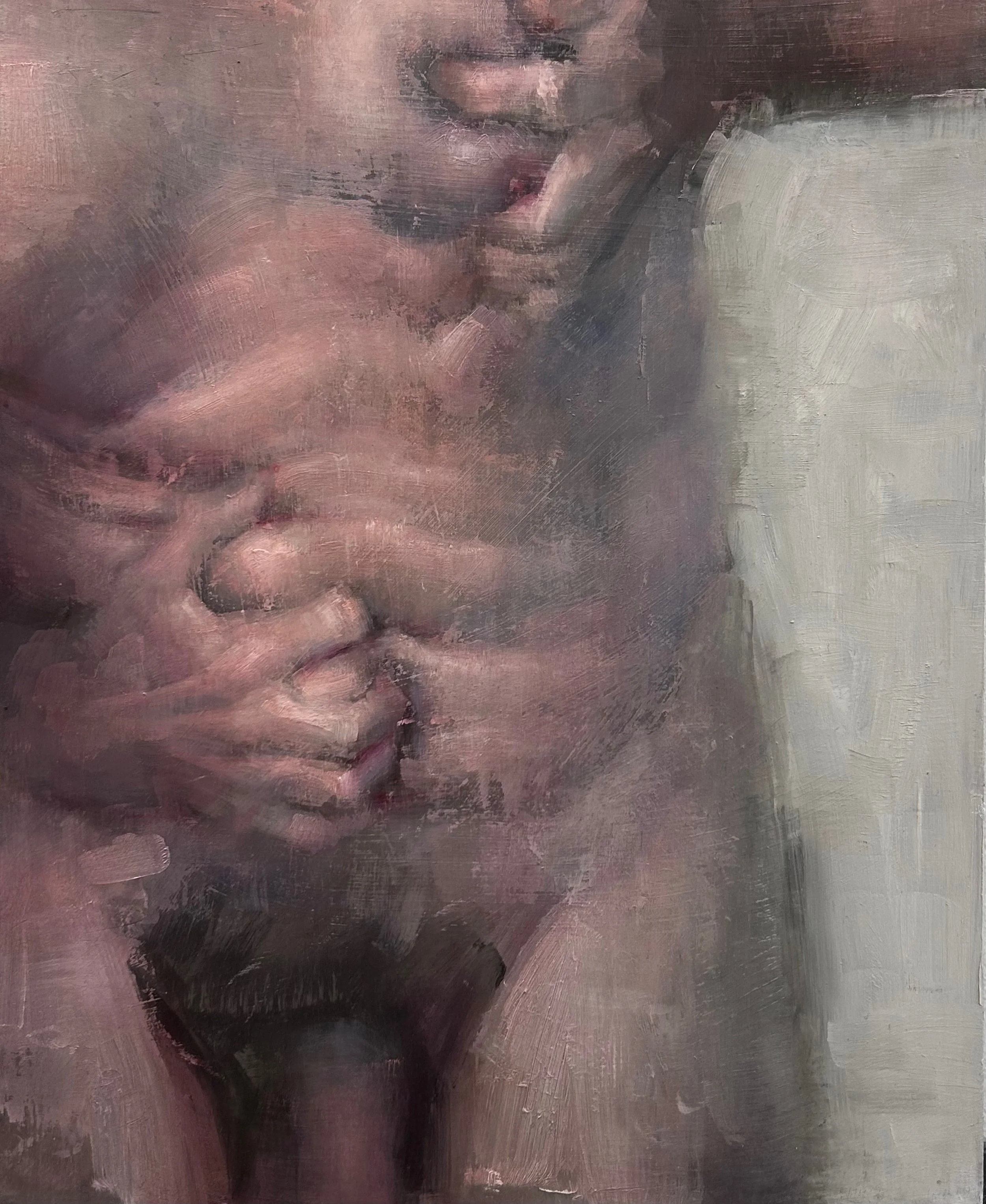
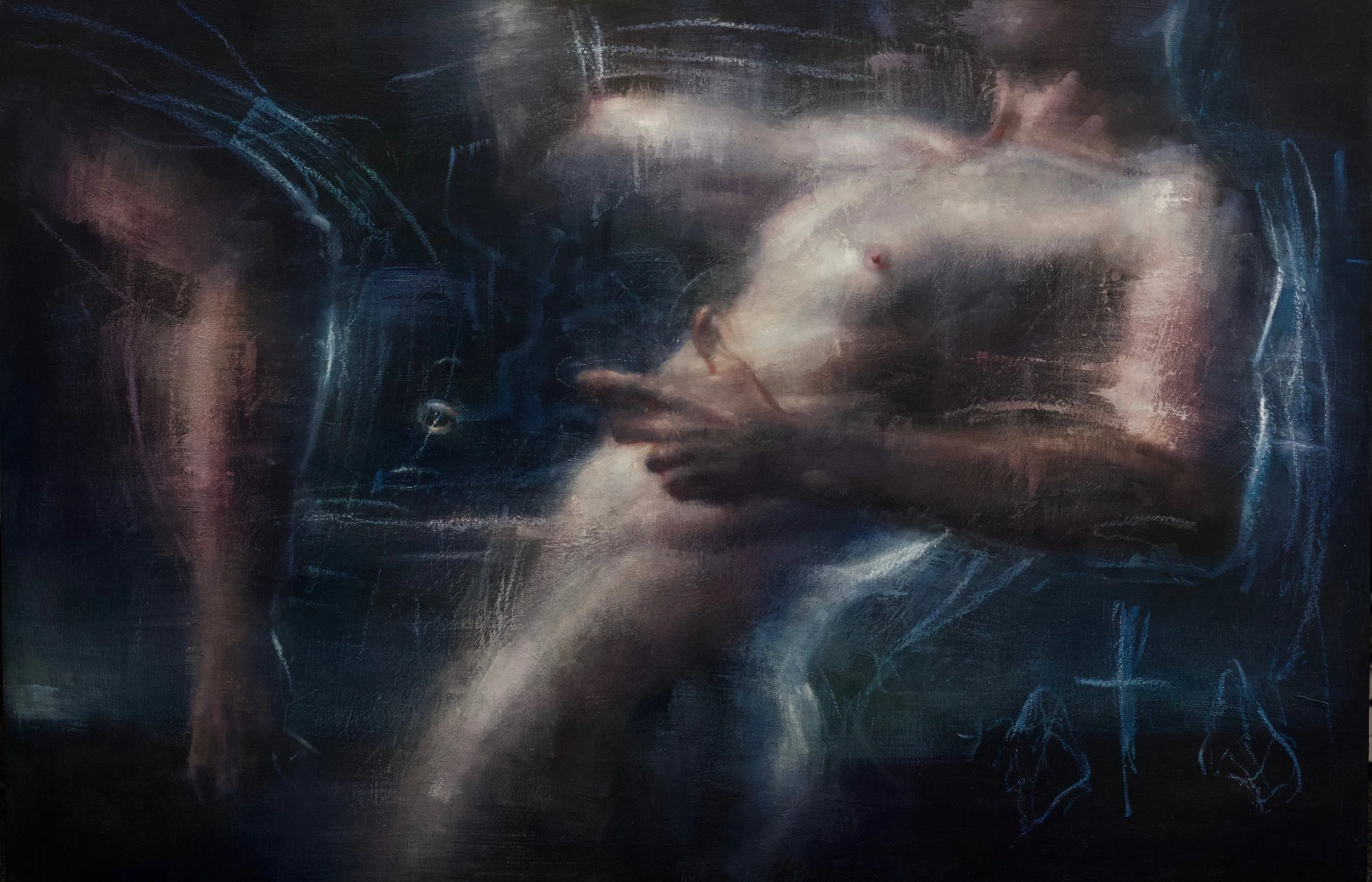
Simms considers how this intersects with queer art, how hypermasculinity has been a form of protective armour to shield against discrimination and the perceptions of the queer body as ‘weak’. Partly inspired by the gritty boxing match artworks of George Bellows, as well the link between hubris and toxic masculinity in Ribera’s painting Ixion, Simms’ works look at how perceived ‘strength’ can handicap true intimacy. Delineating the body as strong and statuesque yet laced with vulnerability and softness, Simms questions what is strength versus weakness, what is liberating and what is oppressive. The body in many of these images is pushed up against the edges of the canvas, the frame a container that both stifles and protects. There is something cinematic here, not simply in the contorted expressiveness but in Simms’ lean palette, his subjects shrouded in chiaroscuro like stills from an intimate neo noir moment. Spectral figures recede into shadowy voids as much as they emerge, a tussle of revelation and concealment, dominance and passivity. There is a synecdochic relationship between these painted physiques, each part connecting as one embodied whole, one perpetual motion, as frames from a film reel.
Simms’ impressive brushwork evokes textiles, natural fibres and threads, weaving together the fabric of the body. Through automatic drawing, the artist has become aware of the possibilities of open mark making to communicate in a more physical way. You can feel the performance of paint here, the musculature of movement. Brush and body, mind and matter, are one. By carving open a space for chance within the tightly choreographed framework of figurative painting, the ephemeral nature of live performance is fossilised through the permanence – and performance – of oil paint. Simms’ gestural bodies are frozen in motion, the canvas like a thin sheet of ice barely able to contain their energy. They pulsate, they quiver, threatening to shatter the surface at any moment. His application of oil here is looser, more liberated, than previous series, the paint an extension of his own performative body as both artist and subject.
In these somatic snapshots, the body talks indeed. Sometimes loudly, with bold gestures and gravelly marks, yet often softly, in Simms’ subdued hues and silent shadows whispering of the profound power that dwells in vulnerability.